It's easy to look at a heavy piece of furniture and decide you can handle it yourself. Plenty of people do — and plenty of people end up with back injuries, dropped refrigerators, and gouged hardwood floors as a result. Moving heavy items safely requires the right technique, the right tools, and knowing when to call for backup.
Always Lift with Your Legs
This is the most repeated advice in the world of moving for a reason — it works. Keep your back straight, bend at the knees, grip the item firmly, and use the power of your legs to stand up. Your lower back is not designed to be a crane. Rounding your back under a heavy load is how herniated discs happen.
Use the Right Equipment
Furniture dollies, moving straps, and furniture sliders make an enormous difference. A good appliance dolly can turn a two-person refrigerator move into a one-person job done safely. Furniture sliders (plastic pads that go under legs) let you glide heavy items across hardwood or tile without lifting at all. Both are available at hardware stores for under $30.
Clear the Path First
Before you pick anything up, walk the entire route from where the item is to where it's going. Remove rugs that could slip, open all doors, check for tight corners, and make sure the landing spot is clear. Carrying a heavy couch around a blind corner you didn't account for is how accidents happen.
Work in Teams
Two people can move almost anything a single person cannot. Designate one person to direct and one to follow — the person facing forward takes the lead. Communicate clearly before every lift, every step, and every set-down. Silence and guessing lead to dropped loads.
When It's Not Worth the Risk
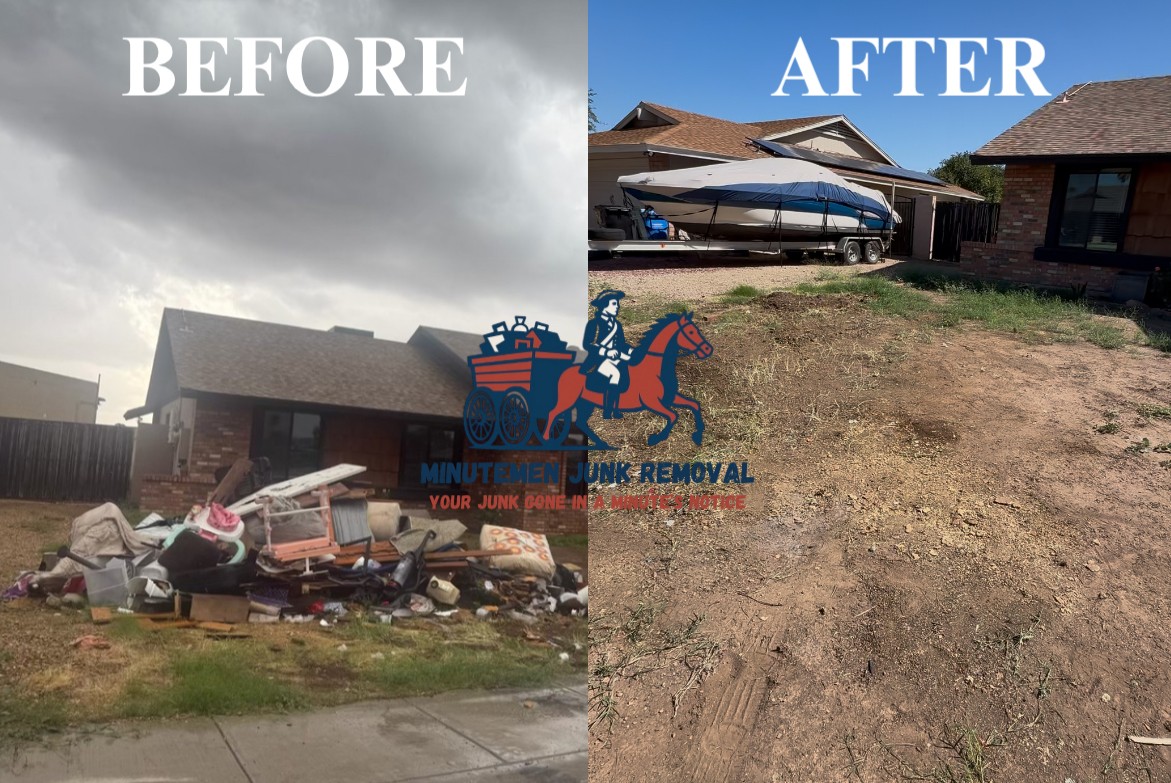
Some items — refrigerators, safes, pianos, hot tubs — are genuinely dangerous to move without professional equipment and experience. If there's any doubt, the cost of a professional junk removal team is far less than an emergency room visit or replacing damaged floors. Minutemen's two-person crews handle heavy items throughout the Phoenix metro every day with the right equipment and training. Sometimes the smartest move is knowing when not to lift.